


Are you an equity resident or an equity tourist?
Beyond Equity by Dr. Simone Charles
January 26, 2026



In education today, the word “equity” is a term we often hear or read in mission and vision statements — yet the commitment we demonstrate toward it varies widely. Many educators believe they are engaged in equity work simply because they are in proximity to the conversation. They attend a workshop, nod in agreement during a presentation, repost an article, or speak passionately about fairness at staff meetings. But is proximity the same as practice?
To ground us in common language, let us adopt the National Equity Project definition of educational equity: “that every child receives what they need to develop to their full academic and social potential.”
Have you ever seen those lawn signs that say, “This house believes in …?” Let’s use a house as a symbol for educational equity as I walk us through a practice of self-reflection. Are you residing in a house that believes in equity, or are you simply a tourist in the equity neighborhood?
Living in equity vs. taking a tour
Do you prefer to tour the neighborhood of equity or even just live “near” it? Do you intellectually agree with the concept while maintaining a comfortable distance? Do you support equity in theory — so long as it does not disrupt the ways things have always been done or require personal examination?
Or do you actually reside “in” a house of equity requiring something deeper? Is your equity work a daily commitment of humility, courageous conversations, reflective practice, and an unwavering belief in our scholars’ humanity, brilliance, and potential? When we reside in the house of equity, the following are in practice:
- We see inequities before they are pointed out.
- We advocate loudly when scholars’ needs are dismissed.
- We analyze our policies, our data, and our instructional choices with a social justice lens.
- We disrupt practices that harm scholars — even when those practices are traditional, convenient, or widely accepted.
- We understand that equity is not an event; it is a lifestyle.
- We refuse to reduce equity to a trend, slogan, or seasonal initiative.
Why this matters now more than ever
Scholars today face unprecedented pressures — academic, social, emotional, and societal. Many of them are internalizing messages that tell them:
- Fairness is for other scholars, not me.
- My identity is a burden, not a strength.
- My challenges define me more than my potential.
- The system will never change, so why should I try?
When scholars feel unseen or undervalued, they begin to believe that fairness is passé — a concept adults talk about but don’t practice. That is where we must intervene. As educators — teachers, counselors, administrators, district leaders — we must model what it looks like to live in the house of equity. Scholars learn more from our actions than from our slogans.
Living in the house of equity means embracing discomfort
Equity is not about universal agreement. It is about universal respect. Living in a house of equity does not mean that we agree on every instructional decision, cultural perspective, or educational policy. It does mean:
- We listen deeply to those whose lived experiences differ from our own.
- We speak honestly without diminishing others.
- We protect scholar voices, even when they challenge our comfort.
- We commit to learning, unlearning, and relearning.
- We lean into respectful, sometimes uncomfortable dialogue.
This is the real work. This is where transformation happens. The following steps will help guide us in building a house of equity.
Steps toward an equity-centered culture
1. Build shared understanding through reflective dialogue: Create structured opportunities for staff and scholars to discuss identity, power, and access. Use protocols that ensure psychological safety and elevate multiple perspectives.
2. Examine data through an equity lens: Look for disparities in attendance, grades, discipline, and course access. Ask: Who benefits? Who continues to be disadvantaged? Who is burdened? Who is missing from advanced opportunities? How have our actions closed opportunity gaps?
3. Center scholar voice: Invite scholars to co-design solutions. Their lived experience is essential to shaping practices that truly serve them.
4. Reimagine policies and instructional practices: Challenge traditions that reinforce inequity. Use restorative practices, differentiated instruction, and culturally relevant curriculum and pedagogy to ensure every scholar has a path to thrive.
5. Commit to ongoing learning: Equity is not a destination. It is continual work — rooted in humility, reflection, and community.
Final thought: Equity is a home we build together
The house of equity is not built in isolation. It is constructed through shared work, shared courage, and shared vision. Every educator makes daily decisions that either reinforce the structure or weaken it.
Our scholars are watching. Our communities are counting on us. And the future demands that we be more than equity-adjacent. More than just a friendly neighbor. It is time — long past time — for all of us to fully build our own home of equity, and full on neighborhoods and cities, where every student succeeds. So let us take off our coats, roll up our sleeves, and get to work, because our scholars deserve a brighter future, and so do we.
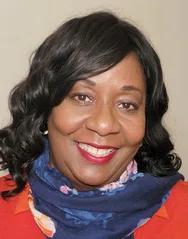
Simone Charles, Ed.D., is principal of Walt Whitman Continuation High School in the Los Angeles Unified School District and the president of ACSA’s Council of Equity Leaders.
FYI
Additional Equity Readings
As we each seek to grow in our awareness and knowledge, here are a few recommended readings to deepen your equity practice:
1. “Finishing The Unfinished Dream: The Road to Educational Equity” – Learning Policy Institute
2. "Equity in Education: Understanding Equity in the Classroom" – NU Editorial Contributors
3. “Why Equity Matters in Education” – National Education Association

What would your lawn sign say?