


Mark Twain Union ESD transportation manager William Sundling is interviewed for “Forgotten Schools.”
Documentary shines spotlight on rural schools
August 24, 2026



One in five students in America attend a rural school. But their stories often go untold.
A former California school administrator and podcaster is hoping to change that with a new documentary film about the rural education experience in America.
Dr. Jeremy Brooks has wrapped filming on “Forgotten Schools: America’s Quiet Crisis,” which will be released in the fall. Several ACSA members were interviewed for the project.
Brooks says his experience as an ACSA member raised his awareness of the needs of rural schools. As ACSA’s Region 7 representative on the Legislative Policy Committee, he represented the needs of administrators in Tuolumne, Calaveras and other counties on the state committee and during advocacy efforts like ACSA’s Legislative Action Days.
“I had a chance to learn about the amazing things happening, but also a lot of the difficulties,” Brooks said.
Staffing shortages, lack of special education services, funding shortfalls — these concerns “hit rural schools a little bit harder,” Brooks said. “A lot of times our students are expected to get less.”
While serving as a vice principal in Manteca USD, Brooks launched two popular education-related shows, The Weekly Recess, a live show with panelists, and The Education Talk Show, a filmed show that took him and a small crew to locations throughout the country.
As the audience for the shows grew — they have reached more than 1.6 million viewers and currently have 312,000 subscribers — Brooks left administration in 2024, deciding to focus on storytelling and teaching. (He is the AP American Government teacher and a department chair at Lathrop High School.)
In 2025, Brooks felt with his production team and skills, he could make the leap to a feature-length documentary — and he and his team knew the first story they would tell was about rural schools.
ACSA Vice President for Legislative Action Jared Hungerford, who was interviewed for the project, said it’s a story administrators from larger suburban and urban districts may not be aware of.
“They often don’t consider the impact of economies of scale, increased costs for goods and services, and lower levels of per-pupil funding for LCFF districts,” said Hungerford, who serves as Calaveras County superintendent of schools. “Beyond the financial challenges, statewide staffing challenges are exacerbated in rural areas as we draw from smaller populations, have no local higher education programs preparing candidates, and limited housing stock to attract outside talent to rural areas.”
While there are many challenges experienced in rural schools, Brooks said the film also captures the good things happening in rural school communities. “There is a tremendous amount of resiliency,” he said. “Folks come together to fulfill needs.”
One example that was captured for the film is WeDeliver Wheels, a community partnership between Mark Twain Union ESD, the local Rotary Club and the local fire department where volunteers build and give away new bikes for students.
Mark Twain Union ESD Superintendent Louise Simson said Brooks’ crew also interviewed teachers and students. Simson said she shared success stories — like the district’s 33-point gain in ELA scores and 19-point gain in math thanks to a new culture of achievement embraced by their students, families and staff.
She also highlighted the funding inequities rural schools face. Simson said she led the filmmakers to a condemned restroom that has been shuttered for years due to a lack of bond funds.
“I go to the Bay Area and see the incredible facilities and opportunities. Why is a kid in the middle of the state in a district of less than 700 kids getting such a different educational experience than a Basic Aid kid on the San Francisco Peninsula within the same state?” Simson asked. “I know the answer, but it isn’t OK, and maybe a film like this can create some meaningful change for students like mine.”
The filmmakers also interviewed Bret Harte Union HSD Superintendent Scott Nanik about operating a rural district of around 600 students. The crew captured the automotive and fire tech CTE programs. “The students love demonstrating what they learn. It was a great overall experience,” Nanik said of filming.
Nanik said rural schools are different from what often gets portrayed in the media.
“Rural schools have all the same requirements from the state, but seldom have the resources to bring it all together,” Nanik said. “Many rural districts are hanging on by a thread — it could be financial, or it could be the demands on staff. Either way we are stretched thin.”
Retired administrator Dr. Rob Martinez also contributed to the film. Martinez, who now lives in Grass Valley, has known Brooks for awhile and has been a guest on his podcast. Martinez said Brooks and his team are taking great care to tell the stories of the committed educators who work in rural communities.
“The people who decide to work in these school systems often do so because they see the importance of being part of a community system,” Martinez said.
Now that the crew is in post-production, work is being completed on an animated sequence in the film. They have also recorded sessions with the narrator — John Morris, the voice actor best known as the voice of Andy in the first four “Toy Story” films. Brooks Broadcasting has also gone through the process to become a SAG-AFTRA signatory, meaning it meets standards to work with union actors and artists.
Brooks says culling through more than 58 hours of footage will be the hardest part. What stories will make it in? The administrator who had to deal with a bear on campus? The CTE fire academy instructor who gave a moving pep-talk to his students?
“There’s just so much amazing stuff — so many good stories from students and staff,” he said.
The film will premiere Oct. 6 with a special free event for cast and crew at The Crest Theatre in Sacramento. A wider release for the film is planned, with a goal of making it “as accessible as possible,” Brooks said.
Hungerford said he hopes the biggest takeaway from the film will be greater awareness of the many different educational experiences in California.
“I hope the general public learns that there are no cookie cutter answers for meeting the needs of all schools in California,” he said. “Our circumstances and our needs across the state are too diverse for a one-size-fits-all strategy.”
FYI
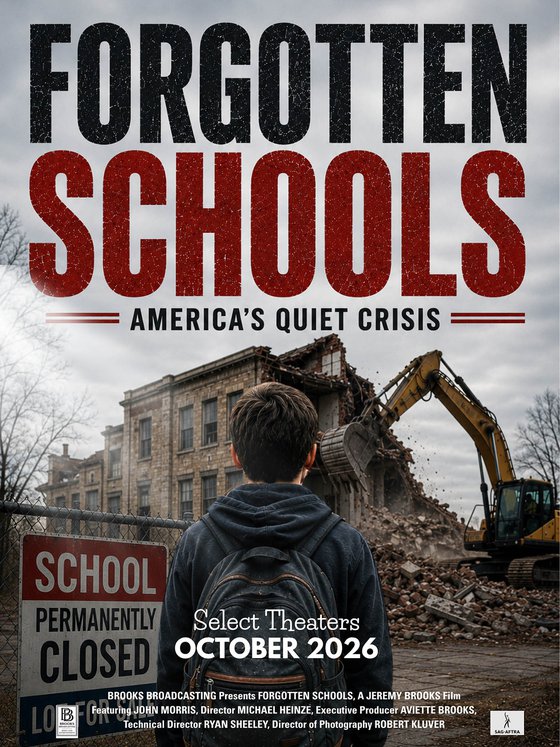
Film Premiere
“Forgotten Schools” will premiere Oct. 6 at the Crest Theatre in Sacramento with a private event for cast, crew and education leaders. Watch a trailer for the film.
Mark Twain Union ESD Superintendent Louise Simson is interviewed for “Forgotten Schools.”

Dr. Rob Martinez and filmmaker Dr. Jeremy Brooks film an interview for “Forgotten Schools.”

Dr. Rob Martinez and filmmaker Dr. Jeremy Brooks film an interview for “Forgotten Schools.”